



PLAnning and Implementation Actions for Sustainability and Circularity (PLA.I.A.)
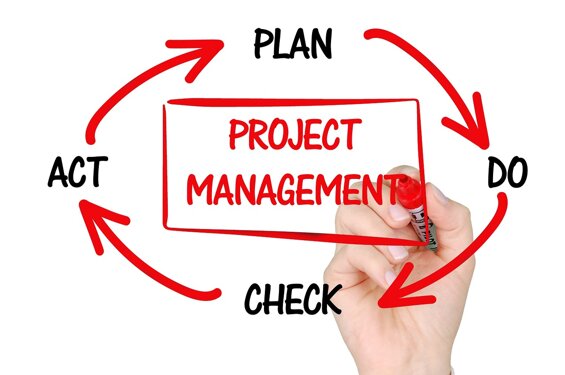
Project Management Methodology:
A Hybrid Approach
The PLA.I.A. project follows a hybrid approach - a waterfall-agile methodologies mix - which allows for flexibility and adaptability throughout its various phases.
The waterfall tools (predictive approach) are used for the initial planning and system design, ensuring that a clear, structured framework is established in the early stages. This phase includes the detailed analysis of industry needs, the mapping of key challenges, and the design of the technological infrastructure (AI, IoT, Blockchain) required for the solution.
Once the foundational systems are in place, “agile tools” (adaptive approach) are used for the development and implementation phases, ensuring continuous improvement, flexibility, and rapid iteration. This is particularly well-suited to the iterative testing and refinement of the digital tools and technologies involved, such as the AI algorithms and IoT sensor deployments. Regular feedback loops and close collaboration with sector-specific stakeholders (from apparel to industrial automation) ensure that the model remains responsive to real-world conditions and is fine-tuned as needed. This hybrid approach supports the project in several ways:
- waterfall ensures a solid, strategic start with well-defined objectives and deliverables
- agile enables rapid adaptation to emerging requirements, technological innovations, and feedback from pilot implementations
- iterative testing and validation within real industrial environments allow the model to be continuously refined for scalability and impact
PLA.I.A.
Driving Sustainable Innovation for Circular Industry Growth
Contacts
Principal Investigator: Fabio De Felice
Department of Engineering,
University of Naples Parthenope,
Centro Direzionale Isola C4, Napoli, Italy
fabio.defelice@uniparthenope.it